


A male fat greenling guards his glittering eggs. (©Fumie Oyama)
このページを で読む
In late December 2025, I accepted an invitation from a dive shop I know well and entered the Sea of Japan in the depths of winter. As I descended into the pitch-black water and switched on my light, countless clusters of fat greenling (Hexagrammos otakii) eggs came into view, sparkling like tiny jewels.

When people think of the Sea of Japan in winter, they often picture fierce waves crashing against rocky shores. Powerful swells driven by strong winds pound the coastline, creating a scene that is both dramatic and intimidating. The region is known as one of the windiest in Japan.
Yet the island is also home to mountain ranges known as Osado and Kosado. In areas sheltered by these mountains, the sea can remain calm enough for diving, making them rare and precious spots for winter divers.

A Golden Fish Appears
This time, we dived at a site known as Kotoura Cave (also called Ryuo Cave) in the Ogi area. The air temperature that day was a relatively mild 6°C (42.8°F) for late December, while the water temperature was a surprisingly warm 15°C (59°F).
About five minutes into the dive, at a depth of 15 meters (49 feet) among the rocks, a male fat greenling with a fully golden body slowly circled clumps of seaweed, keeping a cautious eye on the divers. Beneath him, we spotted six clusters of eggs in shades of pink, orange, and green.
Each egg measures roughly 2 millimeters (0.08 inches) in diameter. Fat greenlings lay anywhere from several thousand to tens of thousands of eggs at a time, attaching them to rocks or seaweed.

A Devoted Dad
Fat greenlings inhabit shallow seaweed beds and rocky areas from Hokkaido to Kyushu. They are prized in Japanese cuisine as a high-quality white-fleshed fish and are also popular among anglers. Their spawning season runs from autumn through winter.
Normally brownish in color, males turn a brilliant gold during the breeding season. They then guard the eggs laid by the females, protecting them from predators until they hatch. The females, meanwhile, leave the area soon after spawning and focus on feeding heavily to regain their strength.

According to diving instructor Hiroyuki Koide, who guided us, the color of the eggs varies from one female to another. The eggs hatch in about a month, but because multiple females lay eggs in succession, a single male may guard them for more than two months. In that sense, fat greenlings are devoted and attentive fathers.

Gear Worth a Mini Truck
This night dive offered both the thrill of relying solely on artificial light and the chance to observe fish rarely seen during the day. It also had another purpose: testing newly purchased photography equipment.
Until now, I had captured still images by extracting frames from GoPro videos. However, the image quality and range of expression were never fully satisfying, which led me to invest in new gear.
To use the mirrorless camera I normally rely on for photographing crested ibises underwater, it must be sealed inside a waterproof, pressure-resistant housing — one that costs more than the camera body itself. Once strobes and underwater lights are added, the total price quickly approaches that of a small kei truck.
Unsurprisingly, my wife was less than enthusiastic. I hesitated over the purchase, but good photographs require investment. Whether my justification — "I'll produce work worthy of the cost" — will be accepted depends entirely on the results I deliver from here on out.
Special thanks to: Diving Service Freeway.
RELATED:
- Swimming with Damselfish and Underwater Wonders
- Meet the Friendly Asian Sheepshead Wrasse, Beloved 'Uncle' of the Sea
- Autumn, When the Crested Ibis is Most Beautiful
- Swallows, Our Lucky Feathered Neighbors
This is the 30th in the series Sado Wildlife in Focus by photojournalist Fumie Oyama.
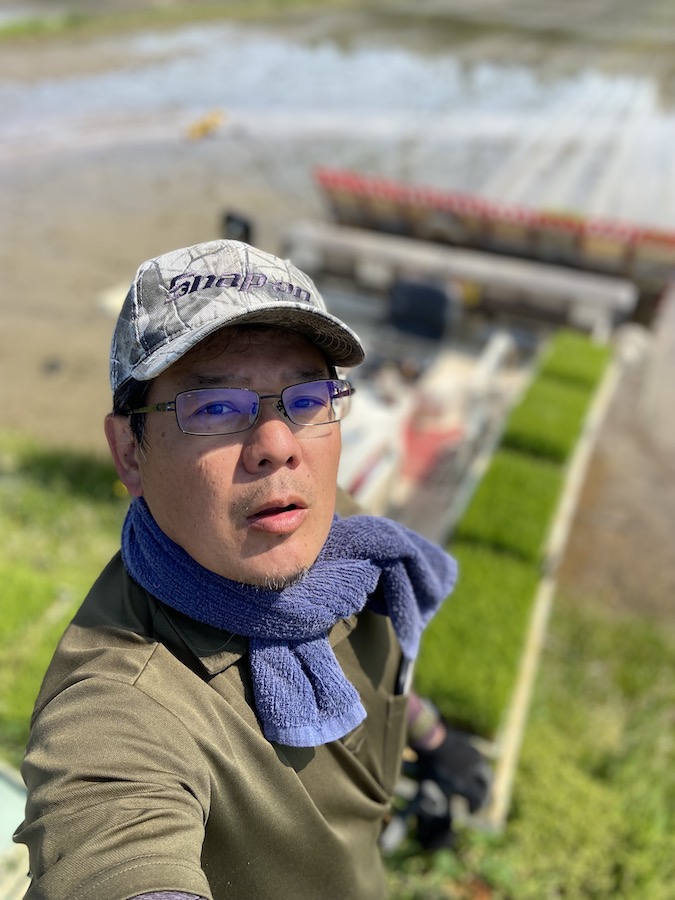
Fumie Oyama is a two-time winner of the Japan Newspaper Publishers & Editors Association Award as a photographer for The Sankei Shimbun. After covering the reintroduction of the crested ibis to the wild for 11 years, Oyama left the company in 2020 to move to Sado Island. There, he continues to photograph the ibis and other wildlife while engaging in farming. He currently promotes the charms of Sado Island as a photojournalist. Follow Fumie Oyama on Instagram.
このページを で読む


