


Then-Japanese Prime Minister Shinzo Abe meets with then Iran's Supreme Leader Ayatollah Ali Khamenei in 2019. (©Kyodo)
このページを で読む
More than a week has passed since the United States and Israel launched military strikes against Iran. Several senior Iranian figures were killed, including Supreme Leader Ayatollah Khamenei, and an American submarine sank Iranian warships in the Indian Ocean.
In response, Iran's Revolutionary Guard attacked a US oil tanker in the Persian Gulf. The situation represents the most serious escalation since the large-scale military clashes between Israel and Iran in June.
Under the first Trump administration, Washington unilaterally withdrew from the Iran nuclear deal in 2018, reimposing sweeping sanctions and pushing tensions with Tehran to the brink of war.
It later designated the Islamic Revolutionary Guard Corps as a foreign terrorist organization.
Abe's Mission to Tehran
During a visit to Washington in April 2019, then–Prime Minister Shinzo Abe was asked by President Trump to mediate between the US and Iran. "Could you go to Iran?" Trump reportedly asked.
"Shinzo, you are close to President Hassan Rouhani of Iran [at the time]. Only you can do it," the president is said to have said. Japan has traditionally maintained friendly relations with Iran, and the late PM Abe had indeed met Rouhani almost every year.
In June of that year, Abe visited Iran, becoming the first sitting Japanese prime minister to do so in 41 years. During the trip, he held lengthy talks with Rouhani and now-deceased Ayatollah Khamenei — an audience rarely granted to Western leaders. It was in an effort to ease tensions in the Middle East and beyond.

Abe reportedly told Iranian officials, "I have heard much about [Ayatollah Khamenei] from my father." He also described the Iranian leader as possessing "outstanding leadership qualities," noting that Khamenei had read works such as Leo Tolstoy's War and Peace and was "a man of profound erudition."
Abe's father, at the time Foreign Minister Shintaro Abe, also visited Iran as a mediator in 1983, amid the Iran–Iraq War. During meetings with then-Iranian Foreign Minister Velayati, he is said to have presented Khomeini with a Japanese translation of the Quran.
Khamenei's Uncompromising Stance
Had Iran compromised and entered into dialogue with the United States, there were proposals for Japan to provide economic cooperation to Tehran.
However, Ayatollah Khamenei remained uncompromising. While the Iranian side expressed gratitude for Japan's mediation efforts and said that "we remain friends," it did not abandon its position that the United States is the worst enemy.
It was also around this time that a Japanese oil tanker was attacked near the Strait of Hormuz.
Abe later recalled that he had to tread carefully, acting more as a "friend of Iran" than a "friend of the United States." It also proved useful that he had been briefed beforehand by Russian President Vladimir Putin on the character of Khamenei.

The Prospects for Ceasefire
The White House is currently filled with President Trump's loyalists. With the November midterm elections approaching, tensions with Iran are likely to escalate further.
At the same time, neither Washington nor Tehran appears to want a prolonged confrontation. Should the right conditions emerge, both sides may ultimately seek a path toward de-escalation.
The hardline Ayatollah Khamenei is now dead. If his successor [reportedly Khamenei's son] proves acceptable to the US, the possibility of ceasefire talks may emerge.
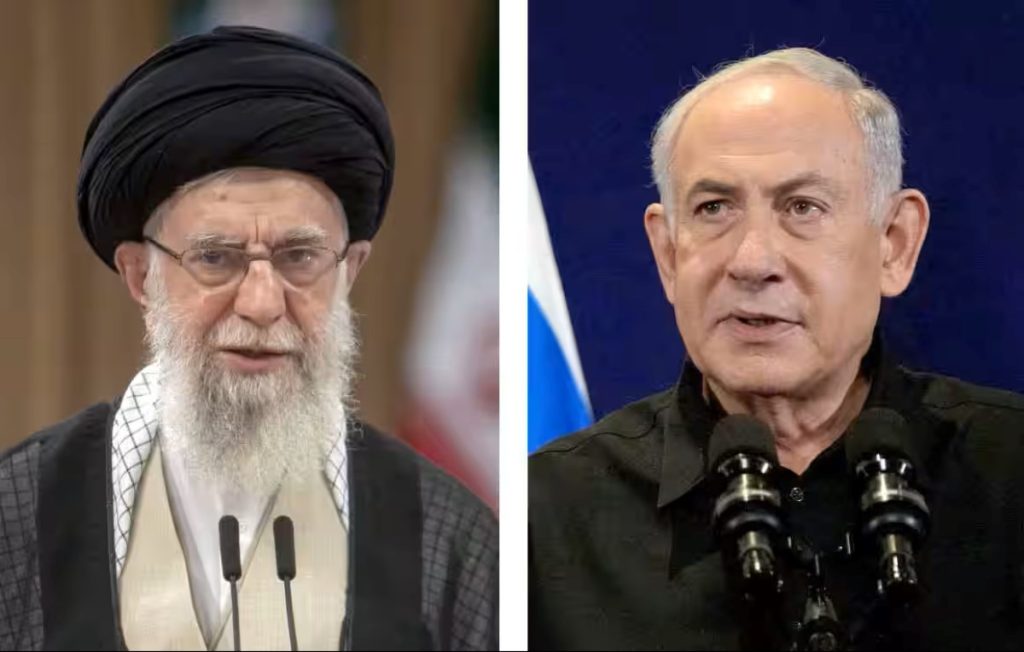
Trump, meanwhile, is highly attentive to market movements. He will likely seek a ceasefire before global markets begin to spiral out of control.
In that case, the key figure would be Israeli Prime Minister Benjamin Netanyahu, who is even harder-line than Trump and seeks to eliminate the Iranian threat by decisively weakening the regime.
At present, several Gulf states have also taken increasingly hostile positions toward Iran, creating a strategic environment that is highly favorable for Israel. The question is whether they would ultimately support ceasefire negotiations.
From the Middle East to Asia
In fact, Shinzo Abe maintained friendly relations with Netanyahu, Turkey's Recep Erdogan, and the leaders of several Gulf states. He could pick up the phone and speak with them at a moment's notice.
Judging from Abe's diplomatic mindset, he would likely have worked tirelessly through quiet diplomacy, weighing various circumstances in search of a workable solution.
In January, the US military intervened in Venezuela and detained President Nicolas Maduro. In February, it launched military strikes against Iran. The United States appears to have pursued regime change in both cases.

But these actions may likewise have served to demonstrate overwhelming American military prowess to China, which seeks global hegemony and regards Taiwan reunification as its core national interest.
In April, Trump is set to visit Beijing on an official state visit. Given Trump's unpredictable nature and affinity for grand deals, he may very well reach a sudden agreement with Xi.
Therefore, Prime Minister Takaichi must draw Trump's attention not only to the Western Hemisphere but also to Asia during her visit to Washington in the coming weeks. She must also secure a commitment that the United States will remain engaged in Northeast Asia.
RELATED:
- The Takaichi-Trump Summit – Some Thoughts for the PM and President
- From Iran Strike to CCP Crisis: The Domino Effect
Author: Akiko Iwata, journalist
(Read this article in Japanese)
このページを で読む


